← All newsletters
August 5, 2024
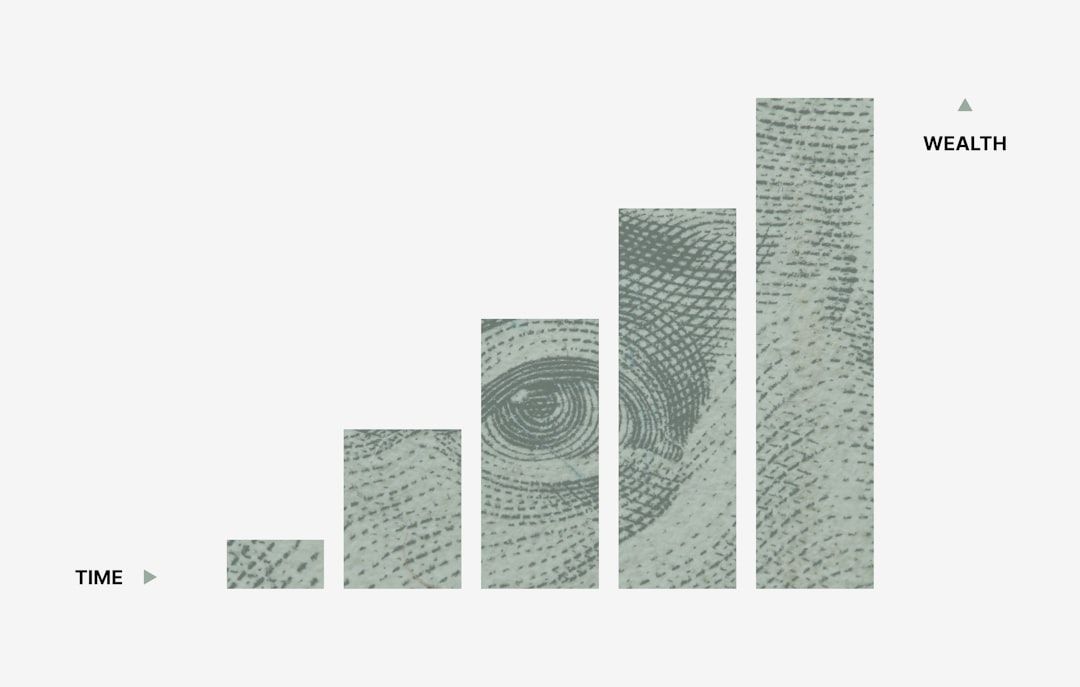
A Charitable Remainder Trust is a tax-advantaged account that enables you to exit your winning positions while deferring the associated income tax liabilities. By postponing these tax payments, you can reinvest the full amount of your gains, thereby allowing your money to grow at an accelerated rate through the powerful effect of compounding. For example, if you make a $1 million profit, you could end up with an extra $3.5 million over your lifetime by using this trust.
Imagine you own something that has made you a lot of money over the years, and now you're thinking about selling it. You've spent a lot of time and money taking care of this investment and watching it grow. But as you think about selling, you're worried about the big tax bill you'll have to pay. You know that a large part of your earnings will go to the government as capital gains taxes. This makes you hesitant because you don't want to lose a big chunk of your profits.
This guide will explain how Charitable Remainder Trusts work. But first, let's talk about why these trusts are important.
A Charitable Remainder Trust is a tax-exempt account that reduces taxable capital gains income. In exchange for a promise to donate some of the trust’s assets to charity at the end of the trust’s term, you receive a considerable tax benefit: You may defer the taxes you would otherwise pay when selling your assets.
In the meantime, the Charitable Remainder Trusts distribute income to you annually for a specified period. When that period is over, donate the remainder — everything that hasn’t been distributed yet — to your chosen charity.
By choosing to defer your taxes and strategically reinvesting the savings you accrue from this decision, you have the potential to significantly enhance your overall returns, potentially increasing them by 50% or even more. This approach allows you to take advantage of the power of compound interest.
Charitable Remainder Trusts protect your gains from taxes when you sell, and the money you save is reinvested and continues to grow. For example, if you are a California resident and you have capital gains of $1 million, you would typically pay about $360,000, or 36%, in taxes, and you would be left with about $640,000 to invest (or spend!) in the future. If your shares were in a Charitable Remainder Trust, the trust would keep the whole $1 million to reinvest.
In the meantime, you get to reinvest those savings. That’s an extra $360,000 reinvested, assuming your average historical returns; that additional investment could turn into more than $7 million over 40 years! That’s the key benefits of a charitable remainder trust and the power of federal-tax-advantaged trusts and compounding.
Another benefit of Charitable Remainder Trusts is that you can keep more of the proceeds from your sale through “tax smoothing” or spreading out your income over time to lower the effective tax rate you pay on your significant gain. So instead of realizing all of the revenue from your sale in one year, you can use them to spread that income out over many years and effectively smooth out your income and, therefore, your tax rate.
In addition, in exchange for the charitable gift you’ll make at the end of your trust, you get an immediate tax deduction during the year you fund your trust, usually equal to around 10% of the value of your assets.
Need some help to understand the most convenient tax planning structure to reduce your taxes?
Our team of tax-planning experts can help!
Setting up a Charitable Remainder Trust is easy.
There are a few tradeoffs associated with the CRT strategy. First, there is a liquidity tradeoff: CRTs allow you to withdraw a certain amount of trust assets each year, so in the early years of the trust, you are giving up upfront liquidity for greater future wealth.
Most importantly, a Charitable Remainder Trust is an irrevocable trust, so you can’t reverse your decision after you’ve funded your trust — though there is some flexibility to make changes or even back out before you’ve placed your assets in the trust.
Charitable Remainder Trusts come in a variety of flavors. For example, you can choose between a Charitable Remainder Unitrust (CRUT) and a Charitable Remainder Annuity Trust (CRAT); between a Term trust and a Lifetime trust (or even one that runs longer than your lifetime). We address each of these choices in a separate series of articles, but here’s how we think about the tradeoffs at a high level.
For years, the CRAT was the standard approach because it was simple and easy to understand. But over time, creative minds realized CRUTs result better. What’s the difference? This Charity Remainder is a “unitrust,” which means it pays out a fixed percentage of the trust’s assets every year, and that amount can go up or down depending on how the trust grows.
Instead, an “annuity” Charitable Remainder pays out a fixed amount of the trust’s assets, determined at the start of the term, and that amount cannot change over time. This might seem like an esoteric distinction, but it has real consequences: If your assets grow over time, a CRUT, by definition, will pay out more significant distributions every year, and you have more control over when you can take your distributions. Plus, per IRS rules, a CRUT can last much longer than a CRAT, and a longer trust term means more tax-free growth and more distributions for you and your family. Overall CRUTs
Erica is a 36-year-old New Yorker with $1m assets that have no cost basis (that is, she paid $0 for it). She wants to set up a 20-year term trust.
No doubt you noticed the bottom line: The total payouts from Erica’s CRUT are significantly higher than from a CRAT. Why is that so? It’s simple: A CRUT’s annual distributions are defined as a percentage of the trust’s assets, measured that year, whereas a CRAT’s annual distributions are a fixed percentage of the trust’s starting value.
Assuming that the trust grows in value over time — a fair assumption for our users, most of whom will aim to match historical market returns. Then, the distributions will be much larger if they connect to the trust’s growing value rather than how much the assets were worth on day 1.
Another benefit is adding additional assets to a CRUT whenever you’d like. Say you added $1m of stock in year one and then had another $1m in year five you wanted to defer taxes on; with a CRUT, you can continue contributing those assets. CRATs don’t offer the same benefit.
In most cases the IRS estimates that you (or your beneficiaries) will receive ~90% of the asset value from the Charitable Remainder Trust, and the charity will receive ~10%. In exchange for giving up that 10% you get the benefits of tax-free growth and receive a deduction for 10% of the value of the trust. In most cases when using the CRT with appreciated assets it allows you to come out ahead in the end as the tax-free growth outweighs the charitable gift.
When we explain the magic of Charitable Remainder Trusts, most people ask: Why does this work? In short, the government has decided that it’s willing to allow people to get tax-free growth in exchange for a promise that they’ll give some money to charity in the future. In addition, since the assets left in a Charitable Remainder Trust at the end will go to a tax-exempt entity, the trust doesn’t pay taxes on its capital gains (and you won’t pay taxes until you withdraw your money).
With most attorneys, it would cost about $10,000-$25,000 and 6 weeks or more to set up a Charitable Remainder Trust. With Taxagon, you can get set up at no cost and in less than 24 hours!
Most of our customers feel concerned about how long Charitable Remainder Trusts last. A CRT can last for a specific number of years, up to 20 years, or the lifetime of one or more people. However, it’s convenient to set up the trust for as long as possible to grow your assets faster by taking advantage of deferring taxes for longer. Also, each of these structures has benefits and costs. Therefore, we worked with our legal partners to design trusts that enhance the value and minimize the drawbacks.
According to Charles Schwab, Charitable Remainder Trusts are “particularly suited for appreciated assets” because they allow for tax deferral, reinvestment, diversification, and, most importantly, significantly improved returns.
We’ve built a community to give everyone access to the tax and wealth building tools typically reserved for wealthy individuals with a team of accountants and lawyers.
We make it simple and seamless for our customers to take advantage of these hard-to-access tax-advantaged structures so you can build your wealth more efficiently at less than half the cost of competitors.
From picking the best strategy to taking care of all the setup and ongoing overhead, we make things simple. The results are real: We and our partners have helped create more than $1.1 billion in additional wealth for our customers.
If you found this newsletter helpful, feel free to forward along and share the subscribe link with a friend.
Have a great week ahead!
P.S. We're planning our educational calendar for the rest of the year. What topic would you next like to see a course on?

Need some help to understand the most convenient tax planning structure to reduce your taxes?
Our team of tax-planning experts can help!
Talk it through with a licensed US tax professional — we'll tell you honestly whether it applies to your situation.

Learn about taxes
NewsletterLearn about Taxagon
About Taxagon


