Tax season doesn’t have to be stressful.
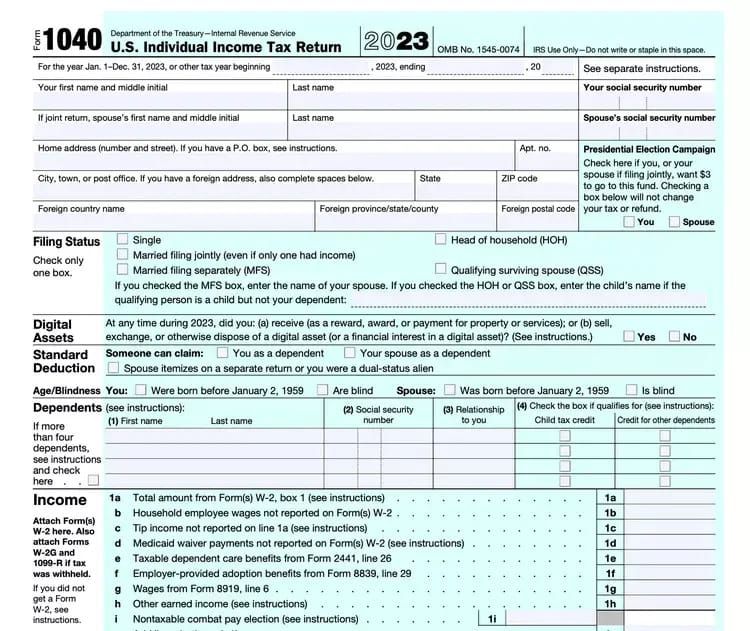
Form 1040 is the IRS’s standard form used by individual taxpayers to file their annual income tax returns. Whether you’re filing for the first time or you’re a seasoned pro, this guide breaks down everything you need to know about this essential form.
What Is Form 1040?
Form 1040 is the primary tax form that U.S. taxpayers use to report their income to the IRS. It helps determine whether you owe taxes or are entitled to a refund. Here’s what you need to know:
- Purpose: To report income, deductions, and credits.
- Outcome: Determines if you owe more taxes or if you get a refund.
- Sections: It asks for personal details, income (wages, interest, etc.), deductions, and tax credits.
Who Needs to File Form 1040?
Do You Need to File?
If your income meets certain thresholds, you’re required to file Form 1040. The general guidelines for 2026 income (filed in early 2027) are as follows:
- Single: $16,100
- Married Filing Jointly: $32,200
- Head of Household: $24,150
If you’re a dependent, you may still need to file if your unearned income exceeds the annual kiddie-tax threshold (indexed each year).
Special Filing Conditions:
- Self-employed with earnings of $400 or more
- You owe additional taxes (like alternative minimum tax)
- You received distributions from health savings accounts (HSAs)
How to File Form 1040: Step-by-Step
Filing Made Easy!
Form 1040 can be filed online (e-file) or by mail. Here’s how you can file:
1. Prepare Your Information:
- Personal details (name, Social Security number).
- Income (W-2s, 1099 forms, etc.).
- Deductions and credits (child tax credits, mortgage interest, etc.).
2. Fill Out the Form:
- Income Section: Report wages, salary, and other income.
- Deductions: Choose between the standard deduction or itemizing.
- Tax Credits: Claim applicable credits (like the Child Tax Credit).
3. Submit Your Form:
- Double-check your information.
- E-file for a quicker, more secure filing process.
Types of Form 1040
Depending on your situation, you may need a variation of Form 1040:
- Form 1040-NR: For non-resident aliens or estate representatives.
- Form 1040-SR: For seniors over 65, with simplified design features.
- Form 1040-ES: For self-employed individuals paying quarterly estimated taxes.
- Form 1040-X: To correct any errors on a previously filed return.
Question:
Are you sure you're using the right version of Form 1040? Make sure to check the IRS guidelines or consult a tax pro!
Deductions & Tax Credits: Maximize Your Refund
Take advantage of available deductions and credits to lower your tax bill or increase your refund.
Common Deductions:
- Standard Deduction: Reduces your taxable income automatically.
| Standard Deductions |
|---|
| Filing Status | 2023 | 2024 |
| Single or Married Filing Separately | $13,850 | $14,600 |
| Married Filing Jointly or Qualifying Widow(er) | $27,700 | $29,200 |
| Head of Household | $20,800 | $21,900 |
- Itemized Deductions: If you have large expenses (e.g., mortgage interest, medical bills), itemizing could be more beneficial.
Tax Credits to Claim:
- Child Tax Credit: Worth up to $2$2,200 per qualifying child (2026).
- Earned Income Credit (EIC): For low- to moderate-income earners.
- Residential Energy Credit: For eco-friendly home upgrades.
Pro Tip:
Tax credits directly reduce your tax owed, while deductions only reduce your taxable income!
Common Mistakes to Avoid
When filing Form 1040, avoid these common mistakes:
- Check Your Information: Ensure your Social Security number and income details are accurate.
- Include All Schedules: If you have additional income or deductions, make sure to include the appropriate schedules (e.g., Schedule C for business income).
- Keep Records: Retain all supporting documents, like receipts and tax forms, in case of an audit.
Conclusion: Filing Made Simple
Form 1040 might seem complex, but once you break it down, it’s manageable. Here’s a quick recap:
- Purpose: Form 1040 is used to file your annual tax return with the IRS.
- Who Needs to File: Generally, if your income exceeds certain thresholds, you need to file. Special cases like self-employment or owing additional taxes also require filing.
- Maximizing Your Return: Take advantage of deductions and credits to reduce your tax bill or increase your refund.
- Avoid Mistakes: Double-check your information and keep all relevant records.
Need Help Filing?
Taxagon is here to make the process easier! Our experts can help you file your taxes accurately and on time. Contact us today to ensure your taxes are filed with confidence!