If you earn over $150,000 as an individual (or $236,000 as a married couple — 2025 thresholds, indexed annually), you’ve likely hit a frustrating roadblock: you can’t contribute directly to a Roth IRA.
But what if I told you there’s a legal way to contribute up to $70,000 per year to a Roth account—far beyond the standard contribution limits?
That’s where the Mega Backdoor Roth comes in.
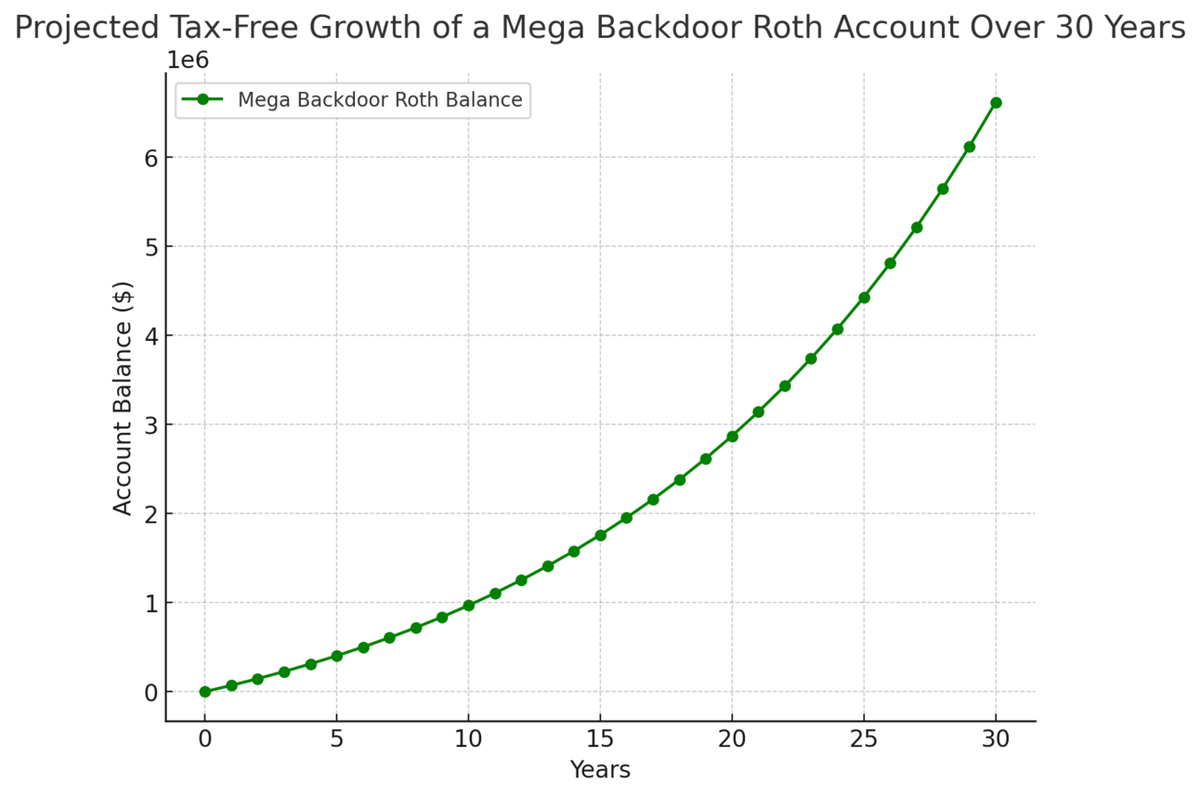
This strategy allows high-income earners to take full advantage of tax-free growth, potentially saving hundreds of thousands (or even millions) in taxes over time.
What Is the Mega Backdoor Roth?
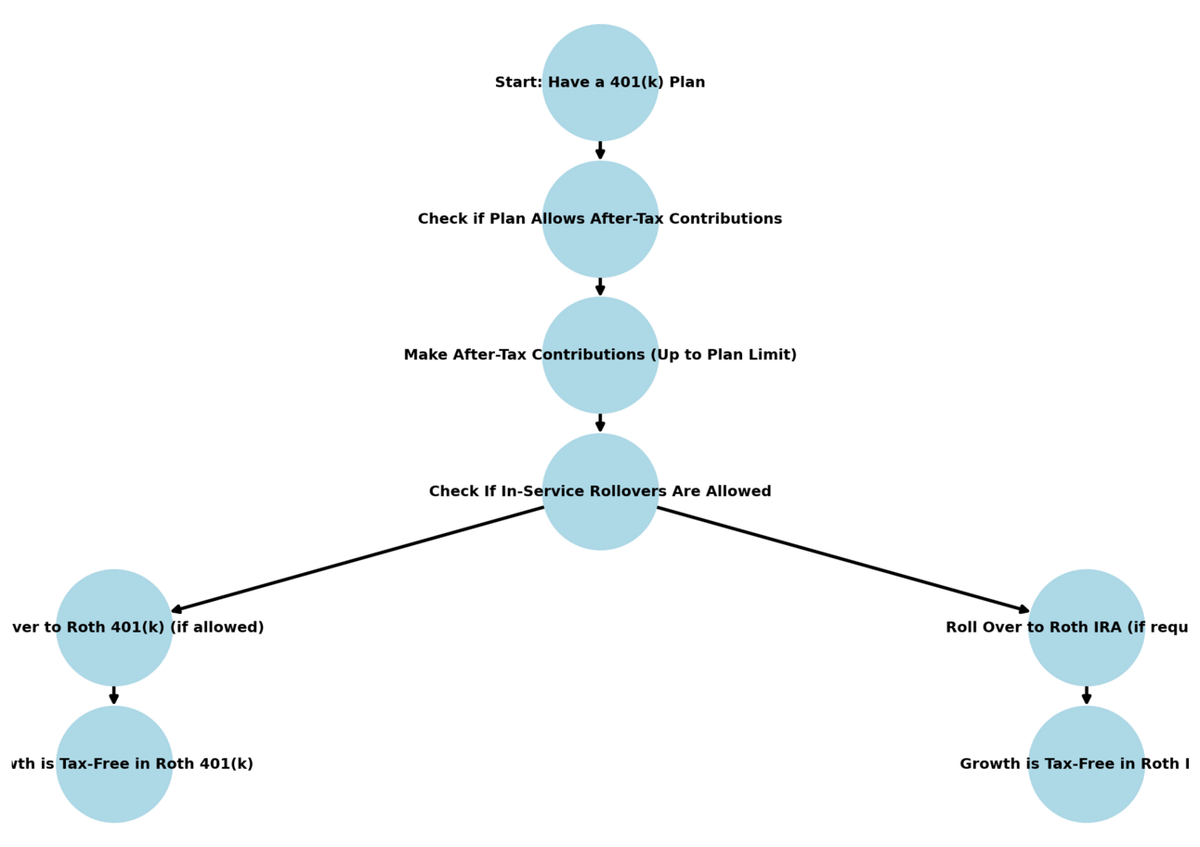
The Mega Backdoor Roth is a strategy that lets you convert after-tax 401(k) contributions into a Roth account, bypassing traditional income limits.
Here’s how it works in a nutshell:
This strategy is especially powerful because it allows you to sock away significantly more into a Roth than the usual limits.
Who Can Use the Mega Backdoor Roth?
This strategy isn’t available to everyone. You’ll need:
Yes! If you’re self-employed, you can set up a Solo 401(k) that allows after-tax contributions and automatic Roth conversions through certain providers.
How Much Can You Contribute?
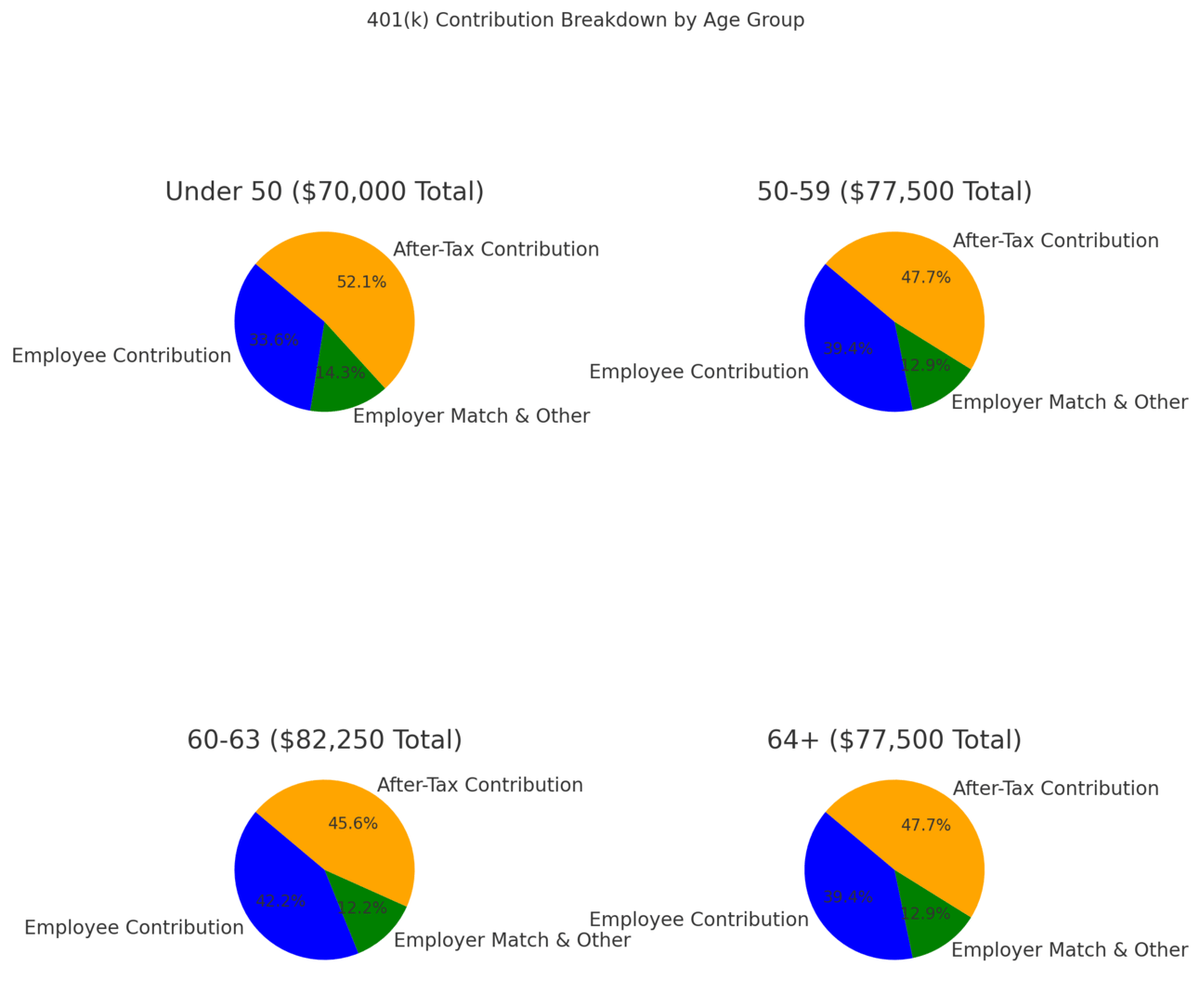
Your total 401(k) contribution limit includes:
This means that in 2026, you can contribute up to $72,000 total (or even more if you qualify for catch-up contributions after age 50).
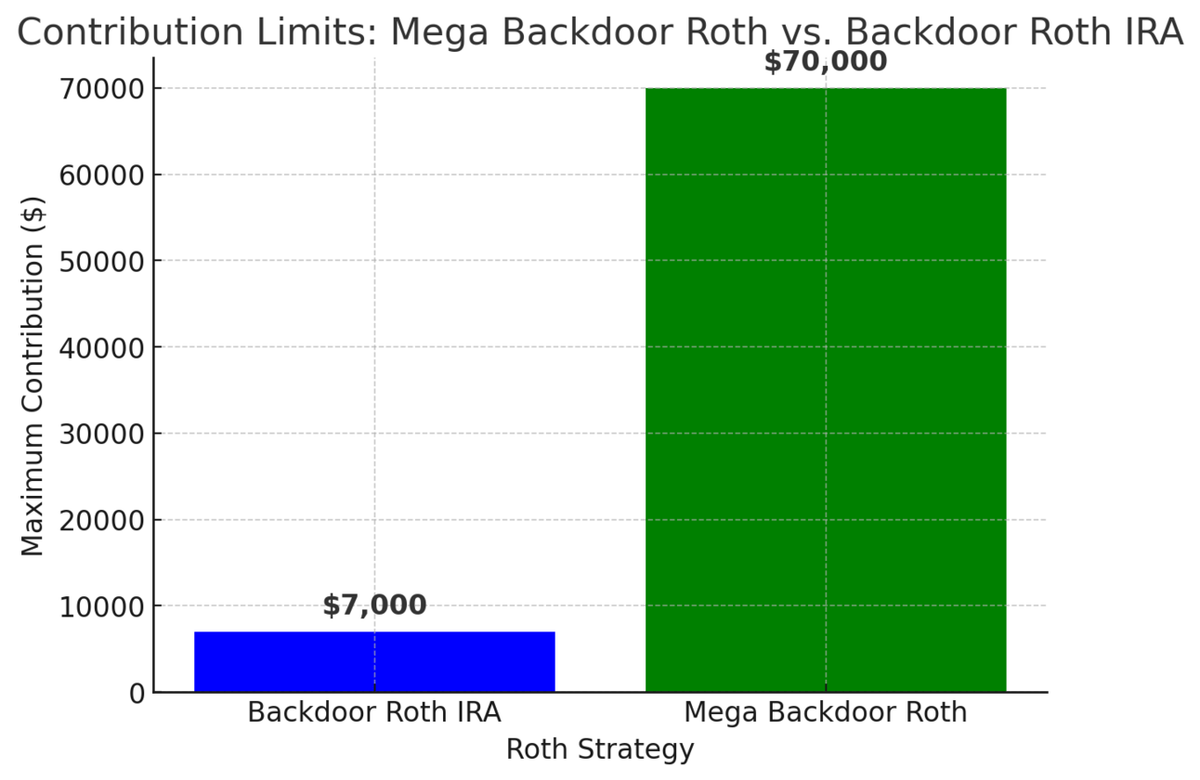
Here’s a quick breakdown of the limits:
If your after-tax 401(k) balance earned interest before the rollover, that portion is taxable.
The Mega Backdoor Roth is different from a standard Backdoor Roth IRA, which is another loophole for high-income earners.
Which is better? If you have access to both, you can use both strategies together to maximize your Roth contributions.
At the end of the year, you’ll receive Form 1099-R, which reports the rollover. Here’s how it affects your tax return:
Tip: If you use a CPA, make sure they understand this strategy. Many tax professionals aren’t familiar with the Mega Backdoor Roth, so double-check that your conversion is reported correctly.
✅ Allows large Roth contributions (up to $72,000 per year (2026 limit))
✅ All growth is 100% tax-free in retirement
✅ Provides creditor protection under ERISA
✅ Ideal for high-income earners who max out other tax-advantaged accounts
❌ Not all employers offer after-tax 401(k) contributions
❌ Can involve extra paperwork (Form 1099-R)
❌ Small risk of nondiscrimination testing issues, which could require refunds of excess contributions
The Mega Backdoor Roth is one of the most powerful tax-saving strategies for high-income earners. If your employer’s 401(k) plan allows it, this can be a game-changer for maximizing your tax-free retirement savings.
Next Steps:
If you found this guide helpful, consider sharing it with a friend who might benefit from this strategy. Let’s make the most of these tax loopholes while they last!
Talk it through with a licensed US tax professional — we'll tell you honestly whether it applies to your situation.